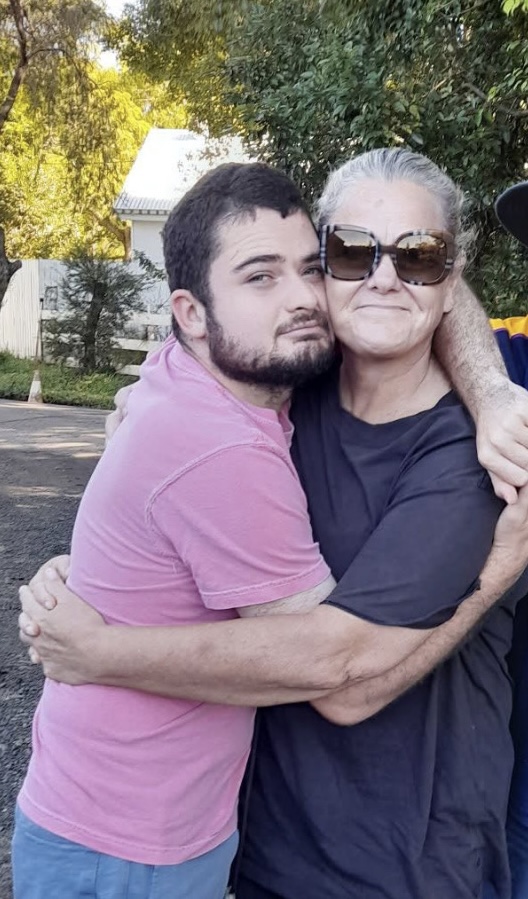
Will is a twin. He and his sister Ella arrived together, and from the very first days the contrast between them was something we had to live with. While Ella met her milestones, Will met seizures. While Ella learned to speak, play, and grow independently, Will's world became defined by neurological instability, hospital admissions, medications, scans, specialists, and uncertainty.
In early infancy, the seizures came without warning. Catastrophic, relentless, terrifying. The kind that divide your life into before and after. One moment we were new parents imagining milestones, birthdays, school, friendships, a future full of possibility for both of our children. The next, we were learning emergency protocols, medication schedules, intensive care routines, and how to function on almost no sleep while living in constant fear.
The seizures stole so much from Will before he ever had the chance to gain it. They disrupted his development during the most critical stages of infancy. And they reshaped Ella's childhood too, because no twin grows up untouched by what happens to the other.
For fourteen years, we didn't have a name for what was happening to him. We knew he had epilepsy. We knew it didn't respond to the usual medications. We didn't know why.
And it was never just epilepsy. Will carries the full spectrum of what SCN2A can bring. Severe intellectual disability. Autism. Movement and motor difficulties. Sleep disturbance. Communication that has never developed beyond a handful of sounds. Behavioural complexity. Gastrointestinal issues. The kind of vulnerability that means a cold can become a hospital admission. Will didn't sit neatly in the epilepsy space, or the disability space, or the autism space. He sat across all of them at once, and the system was never designed for a child like that.
Will was eventually diagnosed with an SCN2A-related developmental and epileptic encephalopathy in 2014, at the age of fourteen. A rare genetic condition that changed the trajectory of his life, and ours, forever.
Today, Will is twenty-four. He lives with intellectual disability and very limited communication. He still lives at home with us, just as he has since the day his seizures began. Our home is not simply a family home, it is also a place of care coordination, advocacy, behavioural support, risk management, and around-the-clock caregiving. We have become nurses, therapists, case managers, and protectors, while still trying to simply be Mum and Dad. And Ella has grown up inside all of it. She is her own person, with her own strengths, her own life, her own future. But she is also the sibling of a brother whose needs have shaped the rhythm of every day we have ever lived as a family.
Yet Will is far more than his diagnosis. He has taught us a different language of connection.
A look, a sound, a smile, a moment of calm, these things carry enormous meaning in our family. Progress is measured differently in our world. Stability is celebrated. Small wins matter enormously. Joy exists, but it exists alongside exhaustion, grief, vigilance, and the knowledge that the future remains uncertain.
Like many rare disease families, we quickly realised that surviving the condition was only part of the battle. Families are forced to navigate fragmented systems, limited awareness, delayed diagnoses, inadequate psychosocial support, and research ecosystems that have historically overlooked ultra-rare conditions. We become the coordinators of care, the keepers of knowledge, and the drivers of progress, because there is no other choice.
The Florey changed what was possible
Soon after Will's diagnosis, we were linked with scientists at The Florey who had already started working on SCN2A. That connection changed everything. For the first time, our family wasn't on the outside of the science looking in. We were part of it.
We worked together to build a biobank of cells, including Will's, so the biology of his condition could be studied in the lab. We linked our family into a natural history study so what the team was seeing under the microscope could be matched against what we were living with day to day. Mechanism and experience, lined up side by side.
Our work at The Florey now sits with three researchers in particular. Associate Professor Snezana Maljevic leads on the functional science, understanding exactly what goes wrong when SCN2A misbehaves. With Bang Bui, we're working on unique biomarkers, ways of measuring what's happening in the brain that could one day tell us whether a treatment is working before we have to wait for clinical signs. With Chris Reid, we're now hoping to understand the co-morbidities that come with DEEs, the conditions that travel alongside the seizures and shape so much of daily life.
These pieces, taken together, lead to better understanding. And in our case, they've led to a treatment now in clinical trials. That's a sentence we never expected to write.
We want to be honest about what that means. The treatment emerging from this work is not for Will. The years he lost cannot be given back, and the biology of his condition is too entrenched for him to benefit in the way a newly diagnosed child might. This work is for the children coming behind him. For the families who will receive an SCN2A diagnosis next year, and the year after, and the year after that, and who will walk into a fundamentally different landscape because of what The Florey has built.
That matters to us just as much. Perhaps more. Will's biology, his cells, our family's data and our years of lived experience are part of the foundation that those future children will stand on. We can't change his story. We can help change theirs.
We still have a long way to go to reach a cure. But we believe it's within arm's reach, if we can keep supporting this important work.
From our family to a movement
Out of our experience with Will, and alongside many other families walking similar paths, SCN2A Australia was built to create something that did not exist when our journey began: a connected, informed, and empowered community capable of driving meaningful change.
What started as families searching for answers has evolved into a national organisation contributing to research, advocacy, education, policy reform, and global collaboration in SCN2A and developmental and epileptic encephalopathies. We have brought families, clinicians, researchers, industry, and policymakers together to accelerate understanding and push for systems that are responsive to the realities families face. We have advocated for equitable access to genomic testing, earlier diagnosis, multidisciplinary care, psychosocial support, and preparedness for emerging precision therapies.
Importantly, we have worked to move the conversation beyond seizures alone. SCN2A impacts every aspect of life: communication, cognition, behaviour, mobility, education, mental health, family functioning, financial security, and long-term wellbeing. Families do not experience these conditions in silos, and systems cannot continue responding in silos either.
As the precision medicine pipeline advances, this work has become even more urgent. For families like ours, these therapies are not abstract scientific breakthroughs. They represent time. Development. Opportunity. Stability. The possibility that future children diagnosed with SCN2A may have a fundamentally different trajectory than Will did.
That progress matters deeply to us because we know what is at stake.
Will's childhood cannot be given back. The years lost to uncontrolled seizures and delayed diagnosis cannot be rewritten. But his story, and the stories of many children like him, are helping drive change for the next generation. Ella's story is part of this too. Siblings of children with severe disability carry their own weight, build their own resilience, and deserve their own place in the way we tell these stories.
Our journey with Will transformed us from parents navigating survival into advocates determined to challenge systems, accelerate research, and ensure lived experience is no longer treated as an afterthought. Because behind every policy discussion, every funding decision, every research paper, and every clinical trial, there are real children and real families living this reality every single day.
Will may have very limited words, but his life has spoken loudly.
He has taught us, and Ella, about resilience, humanity, inequity, love, and what it truly means to fight for a future that others cannot yet see.